


Why Fidgety Kids Often Need More Movement — Not Less

If your child is constantly getting up, wriggling in their seat, tapping their feet or finding excuses to move, it can be tempting to think they need to learn to sit still.
But what if letting them move would be more beneficial?
For some children, movement may actually help them manage their attention, regulate themselves and feel ready to concentrate.
That doesn't mean every fidgety child needs more exercise, or that fidgeting is a sign of ADHD. Children move for lots of reasons. But research increasingly points towards an interesting relationship between movement, attention and behaviour.
Sometimes, the answer to "they won't sit still" might not be more sitting still. It might be giving them more opportunities to move.
Movement and attention are connected
We often think of concentration as something that happens when we're completely still, but our brains and bodies don't work separately.
Research looking at physical activity in school settings has found that movement can have positive effects on children's attention and their ability to stay on task. One reason may be that movement gives children an opportunity to reset.
Adults are often advised to give their body regular movement opportunities throughout the day - walking around or getting some fresh air makes it easier to come back and focus. Therefore, a movement break, which is a short burst of physical activity, not a sports session that tires kids out, can do exactly the same thing for children.

Not all movement is created equal
Activities that involve cognitive engagement appear particularly helpful for movement resets. By this we mean activities that engage the brain as well as the body, where kids have to think about what they’re doing, react and make decisions.
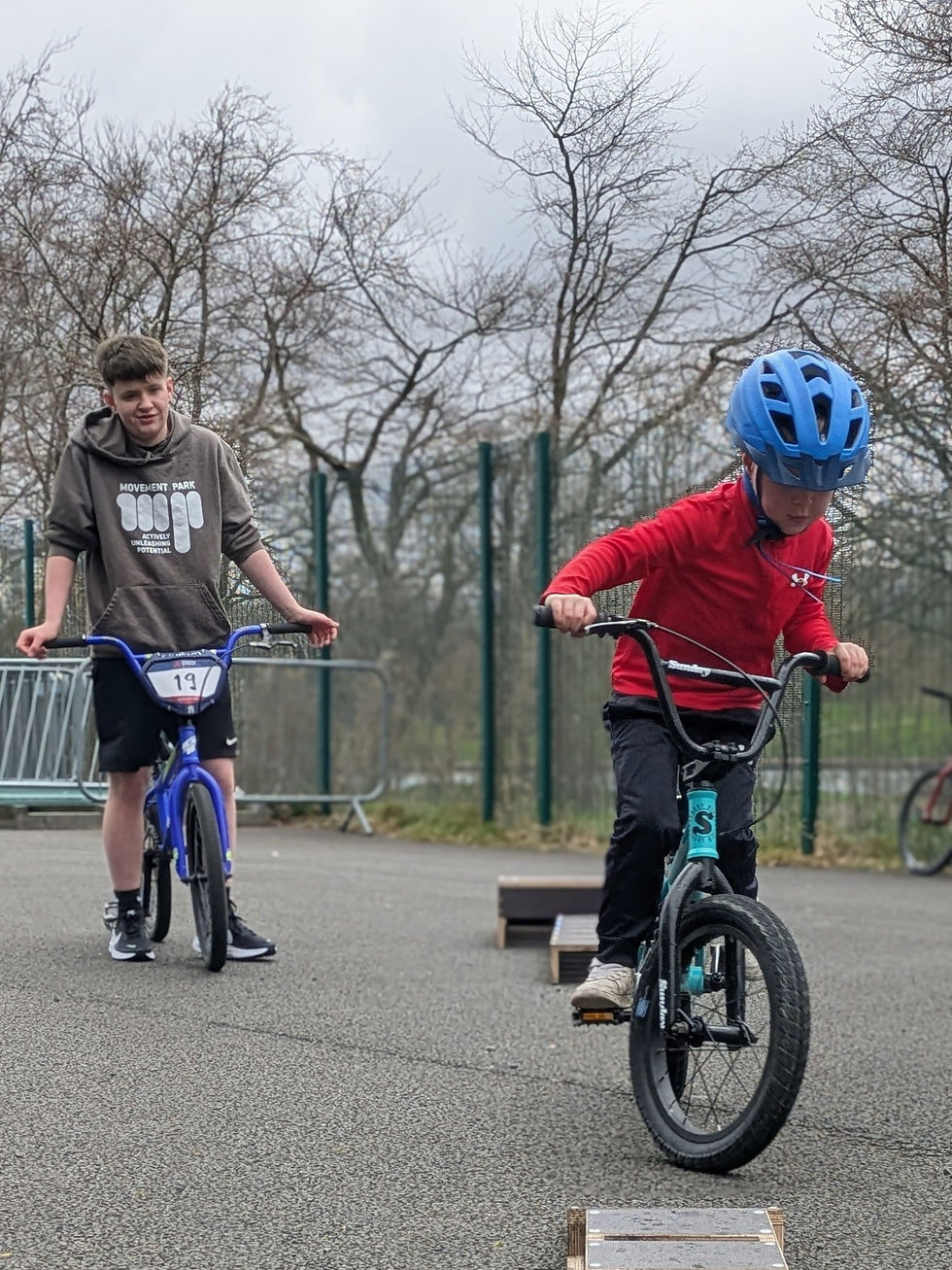
This is where things like parkour, cycling, skating, and other kinds of active play can be particularly interesting.
Planning — What's the best way to get across?
Decision-making — Should I go this way or that way?
Problem-solving — How can I get over this obstacle?
Body awareness — How do I position myself?
Coordination — How do I make my body do what I want it to?
Memory — Can I remember what comes next?
Adaptability — What can I change if it doesn't work the first time?
So the next time your child is fidgeting, wriggling or finding it difficult to stay still, you don't necessarily need to see the movement as something that has to be stopped. Sometimes, their body might be telling you it needs to move. And sometimes, a little more movement could be exactly what helps them stay engaged or help them re-focus.

Try a quick movement reset
Next time your child is struggling to sit still, try swapping “sit still” for a two-minute movement break. You could try:
Traffic lights – Call out green (run), amber (slow motion) and red (freeze). Add in silly actions like hopping, crawling or spinning.
Animal movements – Pick an animal and move like it: hop like a frog, crawl like a bear, waddle like a penguin or jump like a kangaroo.
Balance challenge – Can they walk across the room with a cushion on their head? Try backwards, sideways or heel-to-toe.
Simon Says – Add plenty of movement: jump, spin, touch your toes, balance on one foot, crawl to the sofa.
Mirror me – Stand opposite each other. One person moves slowly while the other tries to copy them exactly.
The aim isn't to tire them out. It's simply to give their brain and body a chance to reset before coming back to whatever they were doing.


Comments